Roofing & Solar Services in Austin, TX
Local Roofing Expertise
In Travis Heights and throughout Austin, TX, roofing contractor services handle everything from storm damage to full replacements. Whether your bungalow in South Congress needs repairs or your new-build in Mueller requires a modern metal roof, understanding your options makes a real difference. This page covers residential roofing, commercial roofing, and metal roofing—plus what to expect when you call.
Austin's heat, hail, and occasional heavy rain put unique stress on roofs. Proximity to contractors who know Central Texas weather and local building codes matters.
How We Work
A clear process keeps you informed every step of the way.
Inspection & Assessment
We examine your roof for leaks, damage, and structural health. Neighborhoods like Tarrytown often have complex roofs that need careful review.
Options & Planning
We explain repair vs. replacement and discuss materials that suit Austin's climate. Permit requirements vary by area; we handle that.
Installation & Repair
Our crew performs the work with attention to detail and quality materials. Flashing and ventilation are critical in Austin heat.
Inspection & Finish
We verify workmanship and ensure local code compliance. Cleanup and final walkthrough wrap the job.
You'll always know what's happening next—and when.
Our Services
Residential Roofing
Single-family homes across Austin—from historic Hyde Park bungalows to modern builds in North Loop—benefit from regular roof inspections and preventive repairs. Storm damage from hail and heavy rain happens fast.
- Asphalt shingle repair and replacement
- Metal roof installation and maintenance
- Leak detection and emergency fixes
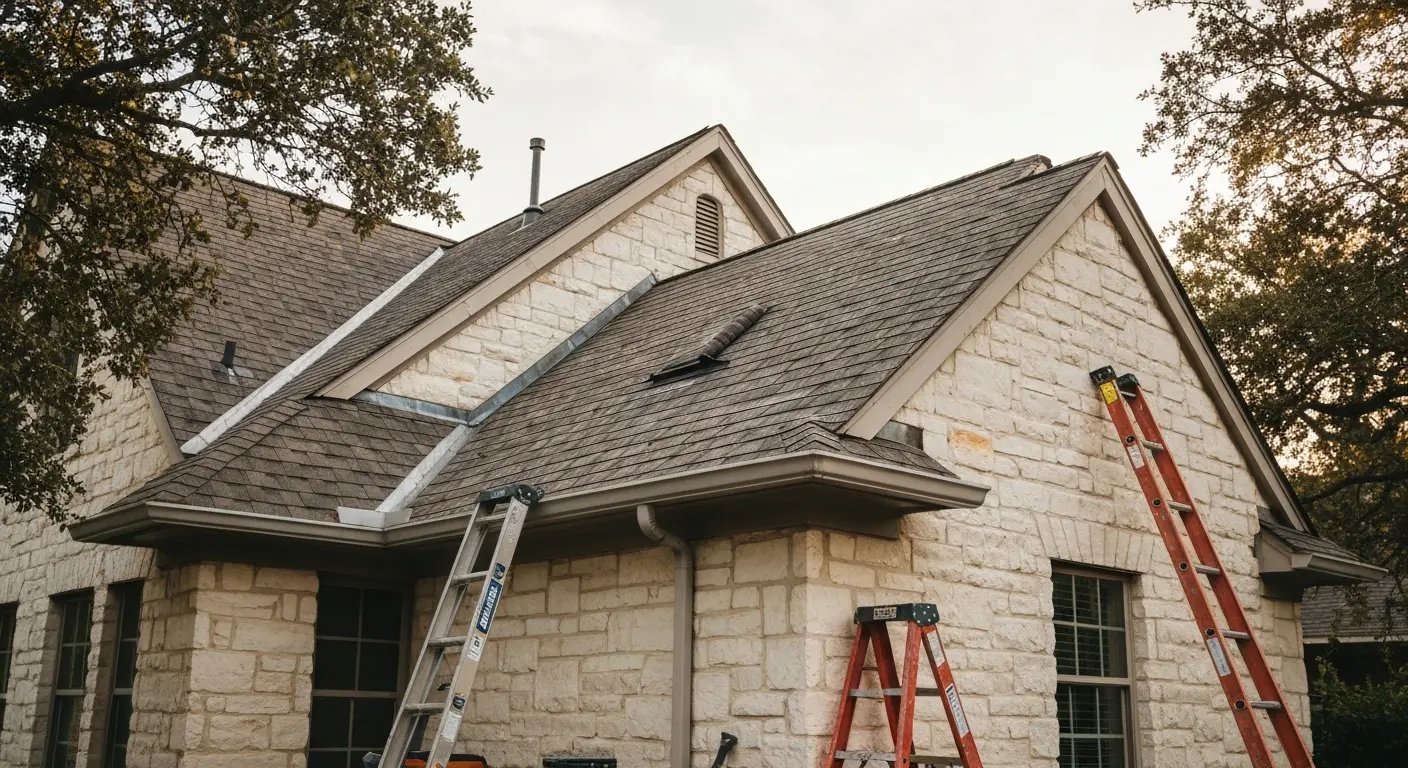
Residential roof repair in Travis Heights, Austin
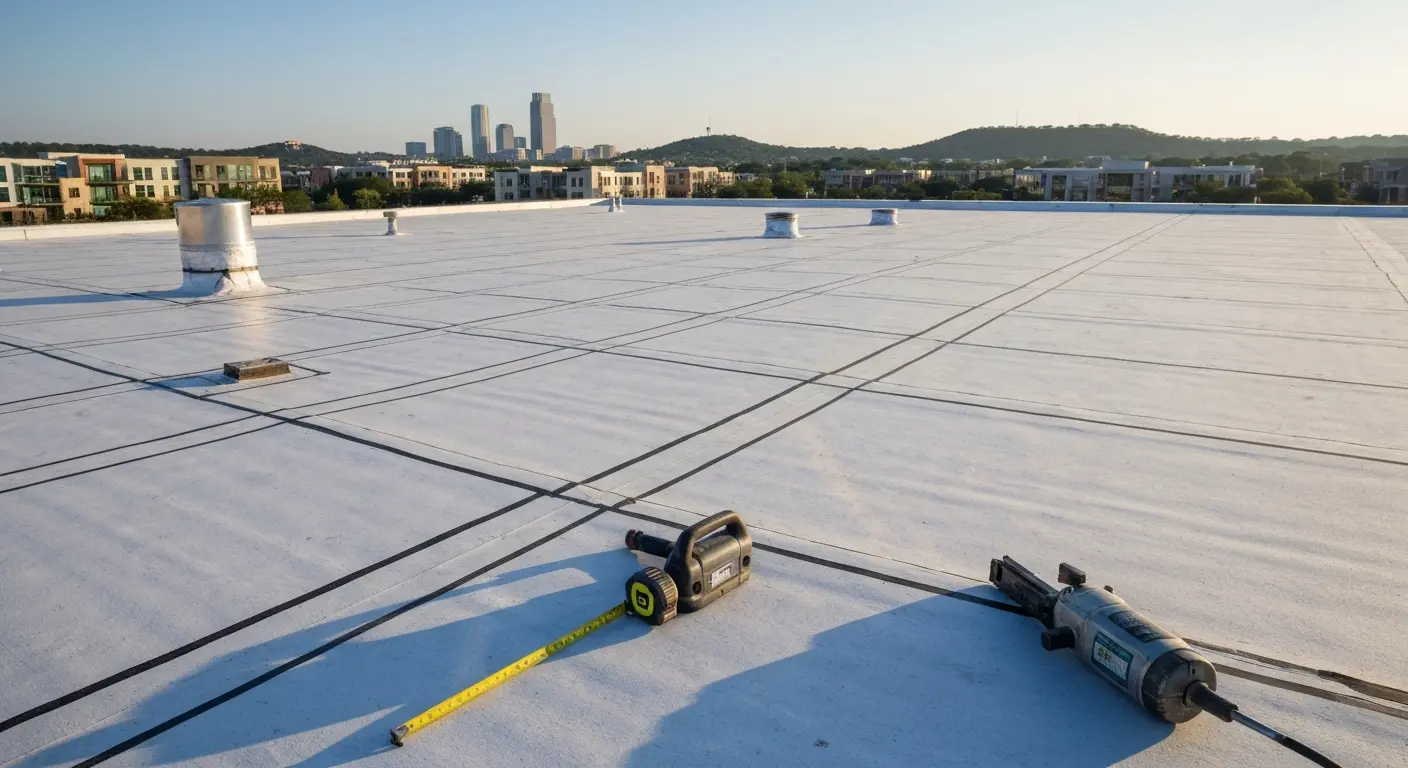
Commercial flat-roof installation near Mueller, Austin
Commercial Roofing
Office buildings, retail spaces, and multi-tenant properties in Austin need durable systems. Flat roofs and low-slope designs require specialized membranes and flashing.
- TPO, EPDM, and PVC membrane installation
- Roof coatings and energy-reflective solutions
- Maintenance programs to extend roof life
Metal Roofing
Metal roofs in Austin are increasingly popular for contemporary homes and eco-conscious properties. Standing-seam steel handles heat and hail well; color options blend with neighborhoods like Steiner Ranch and Tarrytown.
- Standing-seam steel and aluminum installation
- Profiles to suit modern and traditional architecture
- Durability of 30–50+ years with minimal maintenance
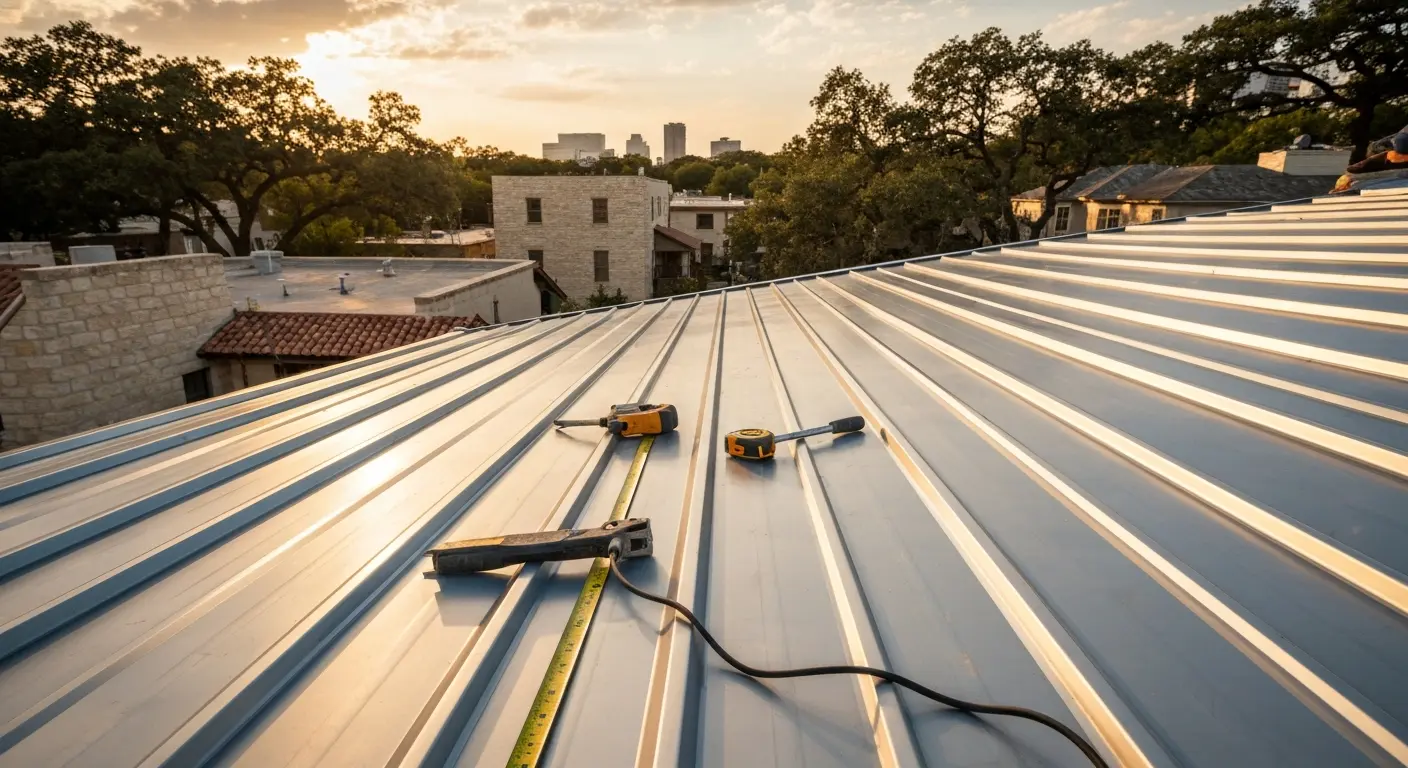
Metal roof standing-seam install in South Austin
Why Local Expertise Matters
Austin's Unique Climate
Intense UV exposure, summer heat, and occasional hail stress roofs constantly. Metal and modern asphalt shingles handle these better than low-grade alternatives.
Building Diversity
Austin spans Queen Anne bungalows, Craftsman homes, contemporary designs, and multi-family buildings. Each needs different materials and techniques.
Permit & Code Knowledge
Local roofing contractors navigate Austin City Code and HOA rules for historic areas like Downtown and newer neighborhoods alike.
Built to Last in Central Texas
A roof installed without proper ventilation, flashing, or underlayment fails fast in Austin's heat. Choosing experienced local contractors reduces costly problems.
20+ years of experience serving Central Texas neighborhoods means understanding what works and what doesn't in each community.
What Affects Your Roof in Austin
Temperature & Sun Exposure
Austin's summers push attic temperatures high without good ventilation. Asphalt shingles curl and lose granules; reflective coatings or cool-roof membranes help.
Spring & Summer Storms
Hailstorms and strong winds between March and May cause lifted shingles, missing granules, and punctures. Inspections after storms catch damage early.
Heavy Rain & Flash Flooding
Pooling water on flat roofs in Mueller and downtown areas tests drainage and flashing. Proper slope and gutter maintenance prevent interior water damage.
Roofing Materials for Austin Homes
Choose the right material for your home's style and Austin's climate.
Architectural Asphalt Shingles
Workhorse across North Loop, South Congress, and Mueller. Cost-effective, widely available, and acceptable lifespans with proper install.
Standing-Seam Metal
Popular in Westlake Hills and Tarrytown. Long lifespan (30–50+ years), excellent wind resistance, and modern curb appeal.
Clay & Concrete Tile
Classic in Spanish and Mediterranean styles around Lake Austin. Heavy; needs structural reinforcement and expert installation.
Flat-Roof Membranes
TPO, EPDM, PVC for commercial and condo roofs. Tight seams and good drainage are critical in Austin's rain and heat.
Solar Energy & Modern Roofing
Solar Energy Contractor Services in Austin, TX
Austin's abundant sunshine makes roof-mounted solar panels ideal. A solar energy contractor evaluates your roof's age, material, and orientation before installation.
Metal roofs are the best match for solar—seam clamps require zero penetrations and often outlast the panels themselves.
Asphalt shingles work if they're in good condition (typically under 10 years old for quality shingles). Tile roofs are fragile and often not recommended.
Austin requires new residential buildings to include a 'solar-ready zone'—an unshaded roof area reserved for future solar systems. This forward-thinking code makes Austin ideal for solar adoption.
Types of Solar Roofing
- Rack-mounted panels: Fastest, easiest retrofit. Sits 4+ inches above roof for cooling airflow.
- Solar shingles: Integrated into roof; blends seamlessly with architecture. More expensive but modern aesthetic.
- Solar roof tiles (Tesla, GAF Energy): Newest technology; functions as both roof and generator.
- Ground-mounted systems: Alternative if roof isn't suitable or shaded by trees common in East Austin.
Getting Here & Serving Your Neighborhood
We serve all of Austin and surrounding areas.
Central Austin Areas
South Congress, Downtown, Travis Heights, East Austin, and West Austin neighborhoods are minutes from our team. Historic bungalows and modern mixed-use buildings alike benefit from fast response times.
North Austin & Suburbs
North Loop, Mueller, Cedar Park, and Round Rock are covered. We handle residential and commercial projects in growing suburban zones.
Southwest & Hill Country
Tarrytown, Westlake Hills, Buda, and Dripping Springs—including tile and limestone-clad homes—are served by contractors familiar with Hill Country architecture and stone roofing techniques.
Frequently Asked Questions
How often should I have my roof inspected in Austin?
At minimum, inspect once annually and again after spring storms. Austin's heat and hail cycles can cause damage quickly.
What roof material is best for Austin's heat?
Metal roofing and high-impact asphalt shingles handle heat and UV exposure well. Metal lasts longest; shingles are more affordable. Cool-roof coatings reduce attic temperatures too.
Can I install solar panels on any roof in Austin?
Metal and modern asphalt roofs work well. Tile is difficult. Roof age matters—solar panels last 25+ years, so your roof should too. Professional solar contractors evaluate fit before design.
Do I need a permit for roof repair in Austin?
Permits depend on repair scope and your property type. Our team handles permit research and applications for your neighborhood's specific rules.
What if my roof is in a historic district or has HOA rules?
Historic areas like Downtown and some neighborhoods (e.g., Circle C) have strict color and material rules. We're familiar with these codes and help you find compliant solutions.
How do I tell if hail has damaged my roof?
Look for lifted shingles, missing granules, small dents on metal, or water spots on ceilings. After spring storms, a free inspection catches damage before leaks start.
DISCOVER WHAT OUR CUSTOMERS HAVE TO SAY ABOUT US
REVIEWS
proudly serving these areas
Arlington, TX
Austin, TX
Bellaire, TX
Charlotte, NC
Charlotte, MI
Chula Vista, CA
Clear Lake, TX
Dallas, TX
READY TO take the next step?
get a free quote TODAY!
QUICK LINKS
our services
service areas
operating HOURS
Mon: 8:00 am - 8:00 pm
Tue: 8:00 am - 8:00 pm
Wed: 8:00 am - 8:00 pm
Thu: 8:00 am - 8:00 pm
Fri: 8:00 am - 8:00 pm
Sat: 8:00 am - 8:00 pm
Sun: Closed - Closed