
Roofing & Solar Services in Downtown Houston, TX
Local Roofing Contractor Expertise
Downtown Houston, TX faces unique roofing challenges from Gulf Coast weather and dense urban construction. Whether your building sits near Buffalo Bayou or in the heart of the Theater District, a roofing contractor | Downtown Houston, TX understands local climate demands. This page covers residential roof repair, commercial roof replacement, metal roofing systems, and storm damage restoration tailored to downtown properties.
Downtown roofs endure constant heat, hail, heavy rains, and wind exposure. We detail what to expect from local contractors, how storm damage gets assessed, and why proximity matters for fast response.
How Roofing Projects Work in Downtown Houston
From initial inspection through final walkthrough, each step is transparent.
What's Involved in Your Roofing Project
Roofing work in downtown areas requires careful planning due to building access, neighbor coordination, and permit requirements unique to urban districts like those near Allen's Landing or the Theater District.
Detailed Roof Inspection
We assess current conditions, identify damage from hail or wind, check flashing and gutters, and document findings for your records and any insurance claim.
Material Selection & Permits
We recommend materials suited to Houston's heat and hail. All downtown projects comply with City of Houston permitting and building codes for your district.
Prep & Access Setup
Urban buildings require careful planning for equipment access, parking coordination, and neighbor notification. We handle all logistics to minimize disruption.
Expert Installation
Skilled crews install roofing with precision. We follow all manufacturer specs and Houston's climate-specific building requirements for durability.
Final Walkthrough & Cleanup
We inspect every detail with you, address any questions, remove all debris, and ensure your property looks perfect upon completion.
Ongoing Support
After completion, we provide maintenance reminders and answer questions. Regular inspections protect your investment through Houston's demanding storm season.
You'll always know what's happening next—and why each step matters.
Our Services for Downtown Properties
Residential and commercial roofing solutions built for Houston's climate.
Residential Roof Repair & Replacement
Homes in downtown neighborhoods experience repeated exposure to hail and heavy rain. We repair missing or damaged shingles, seal leaks caused by storms, and replace aged roofs with impact-resistant materials rated for Class 3 hail resistance.
- Asphalt shingle repair and replacement
- Metal roofing installation for durability
- Storm damage documentation and insurance support
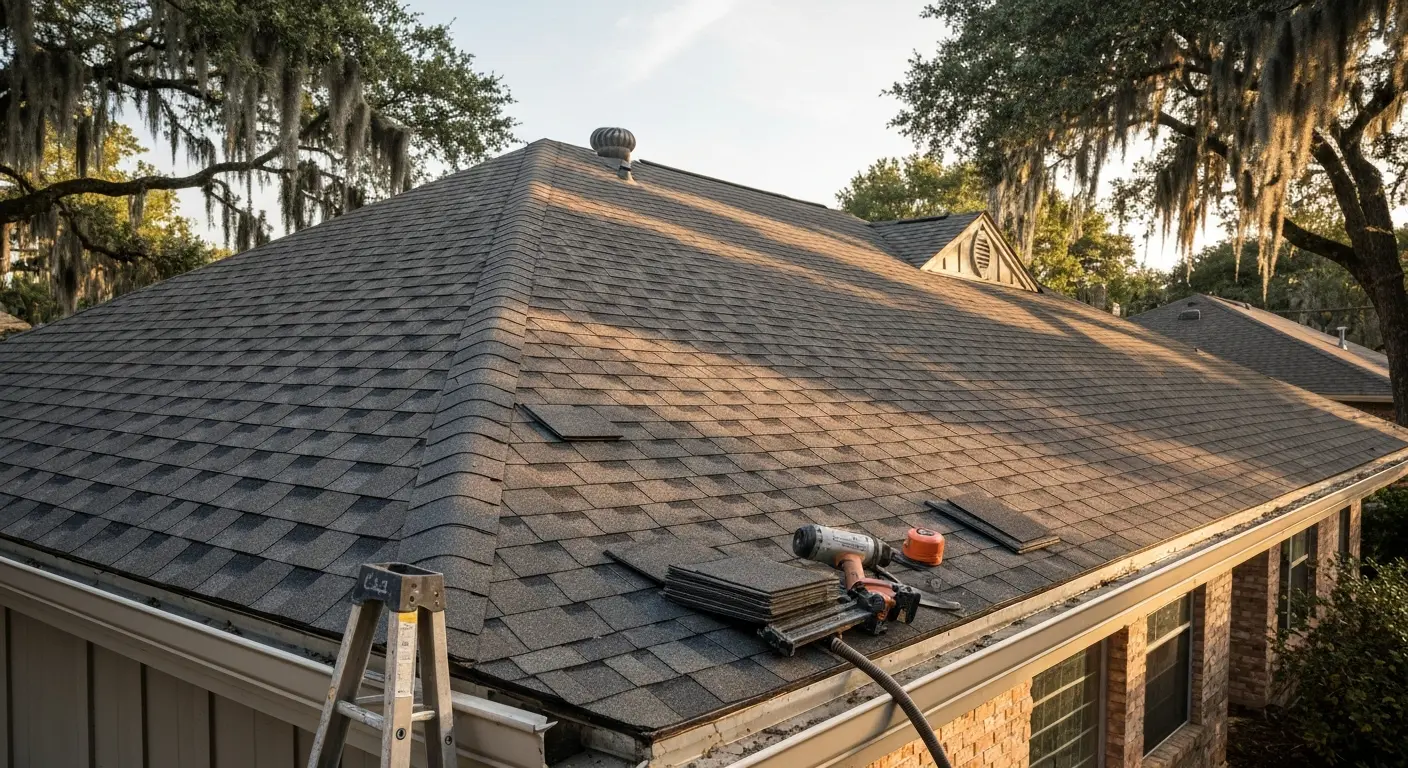
Family home roof replacement with Class 3 impact-resistant shingles near Buffalo Bayou.
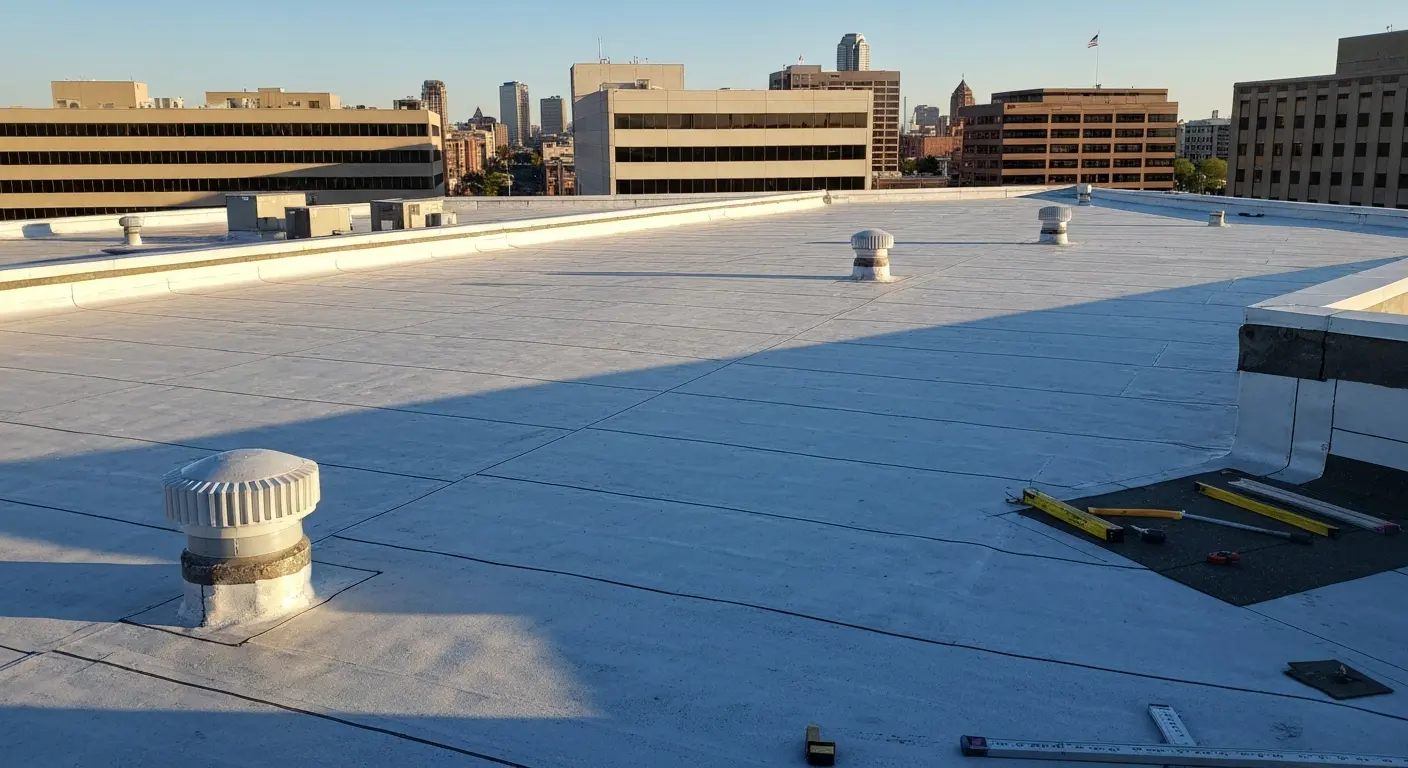
TPO flat roof system installed on downtown office building with proper drainage slope.
Commercial Roofing Solutions
Downtown office buildings, retail centers, and mixed-use properties require flat roof systems designed to handle ponding water, extreme heat, and storm stress. We install TPO, EPDM, and metal systems with proper drainage and ventilation.
- Flat roof installation and repair
- Preventive maintenance programs
- Emergency leak repair and restoration
Metal Roofing Installation
Metal roofs outperform traditional shingles in Houston's hostile weather. They resist wind uplift, hail dents, thermal expansion, and corrosion from Gulf Coast humidity. Ideal for downtown lofts, historic properties, and high-rise renovations seeking durability.
- Standing-seam metal panel systems
- Corrugated and ribbed metal roofing
- 25+ year durability with color fade warranty
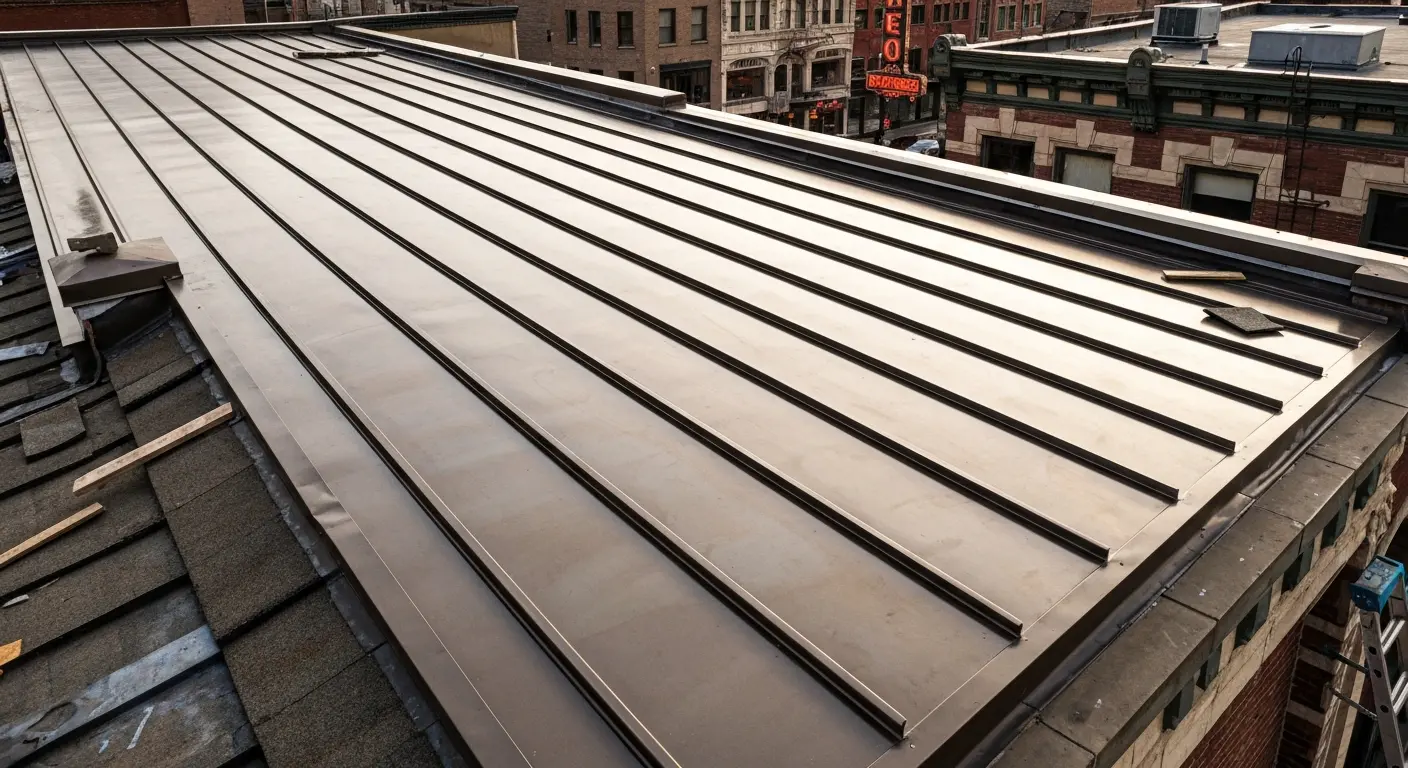
Standing-seam metal roof on historic loft conversion in Theater District.
Hurricane-Season Preparation: Before storm season, we conduct pre-storm inspections and secure loose components. Early action prevents hail and wind damage from stranding you without coverage.
Why Downtown Houston Roofing Is Unique
Urban location, extreme weather, local codes—understanding these factors helps you choose the right contractor.
Heat, Hail & Hurricane Exposure
Houston experiences 50–60 days of thunderstorms each year, with severe storms occurring on about one-third of those days. Downtown roofs absorb full sun intensity, endure hot, humid subtropical climate characterized by long summers with average summer temperatures often soaring above 90°F. Hail, high winds, and rapid water runoff create constant stress.
Dense Urban Setting Near Buffalo Bayou
Properties close to Buffalo Bayou, which hugs the northwest side of downtown, face elevated flood risk during heavy rains. Roofing contractors familiar with downtown districts understand building orientation, access constraints, and neighborhood coordination required for safe, clean work.
City Permitting & Building Codes
The City of Houston requires roofing permits to ensure projects meet regulations, with the Houston Permitting Center located in downtown Houston. Downtown roofing contractors navigate these requirements and ensure your project passes final inspection.
Insurance Documentation: After storm damage, contractors who understand local claims processes help strengthen your case. Early professional inspection and detailed photos support faster settlements.
Storm Damage Is Common—Fast Response Matters
After hail or high winds, roofs must be quickly evaluated after severe weather events, with professional inspectors looking for hail impact marks, granule loss, and uplifted edges that can compromise roofing materials. Local contractors respond quickly before secondary leaks and water damage spread.
Featured Insight: Impact Resistance for Houston Roofing
What Is Class 3 Impact Resistance?
Class 3 impact-resistant shingles are designed to withstand hail damage that would damage standard roofing. To be classified as Class-3, shingles must survive a 1.75-inch steel ball dropped from 17 feet, which simulates real-world hail up to 1.25 inches in diameter. Given Texas has led the nation in hail damage claims for years, Class 3 shingles are essential for downtown properties.
- Reduces insurance risk and repair costs
- Extends roof lifespan in Houston's climate
- May lower homeowner insurance premiums
Choose impact-rated materials; skip corners on installation to protect your investment.
Getting Help in Downtown Houston
Finding a nearby contractor saves response time during emergencies.
Why Proximity Matters
A roofing contractor based in or near downtown can respond within hours after storm damage. Contractors familiar with downtown properties know street access, parking rules for different blocks, and which buildings have height restrictions or historic preservation requirements.
What to Ask Before Hiring
- Do you hold current City of Houston roofing licenses and insurance?
- How quickly can you conduct emergency inspections after storms?
- Do you assist with insurance claims and documentation?
- What materials do you recommend for Houston's hail and wind exposure?
- Can you provide references from recent downtown projects?
Free Inspections: Reputable contractors offer free roof inspections before and after storms. Written estimates should specify materials, scope, and compliance with local codes.
Frequently Asked Questions
How often should I have my roof inspected in downtown Houston?
At least once a year, plus within 24 hours after any severe storm, hail event, or high-wind weather. Professional inspectors should conduct bi-annual roof inspections to identify early issues before they become emergencies.
Does my homeowner's insurance cover storm-damaged roofs?
Most homeowner policies cover sudden storm damage (hail, wind) but exclude wear-and-tear or neglect. Contact your insurer and request a claims adjuster. Professional contractors document damage with photos and measurements to support your claim.
What's the difference between roof repair and roof replacement?
Repair addresses isolated damage (missing shingles, small leaks, flashing issues) and extends roof life. Replacement removes the old roof and installs a new system when damage is widespread, the roof is 20+ years old, or repairs become uneconomical.
Are flat roofs common on downtown buildings, and are they hard to maintain?
Yes, flat roofs dominate downtown commercial and multi-unit properties. Heavy rains can build up on flat roofs, which are common in these buildings, putting stress on the roofs and causing leaks. Regular maintenance (gutter cleaning, drainage checks, sealant inspection) prevents costly leaks.
How do I know if my roof has hail damage?
Look for soft spots or dents on shingles, granule loss in gutters, missing or cracked shingles, and brown or black bruises on asphalt. Hailstorms can leave visible dents on metal gutters and downspouts, and while these dents seem like a cosmetic issue, they can also indicate potential damage to the roof. A professional inspector confirms extent.
Can metal roofing handle Houston's climate better than asphalt shingles?
Yes. Metal roofing steps into the ring with hurricane-force winds and doesn't blink—it's like the superhero of roofing materials—durable, long-lasting, and incredibly resistant to wind, hail, and fire. Metal roofs last 25+ years and require less maintenance than asphalt in Houston's heat and hail.
DISCOVER WHAT OUR CUSTOMERS HAVE TO SAY ABOUT US
REVIEWS
proudly serving these areas
Arlington, TX
Austin, TX
Bellaire, TX
Charlotte, NC
Charlotte, MI
Chula Vista, CA
Clear Lake, TX
Dallas, TX
READY TO take the next step?
get a free quote TODAY!

QUICK LINKS
our services
service areas
operating HOURS
Mon: 8:00 am - 8:00 pm
Tue: 8:00 am - 8:00 pm
Wed: 8:00 am - 8:00 pm
Thu: 8:00 am - 8:00 pm
Fri: 8:00 am - 8:00 pm
Sat: 8:00 am - 8:00 pm
Sun: Closed - Closed